NEW SYSTEM
Design the production as one workflow
Plan cameras, audio, switching, streaming, recording, control, monitoring, and network needs around the audience and operators.
Tell us what you need to produce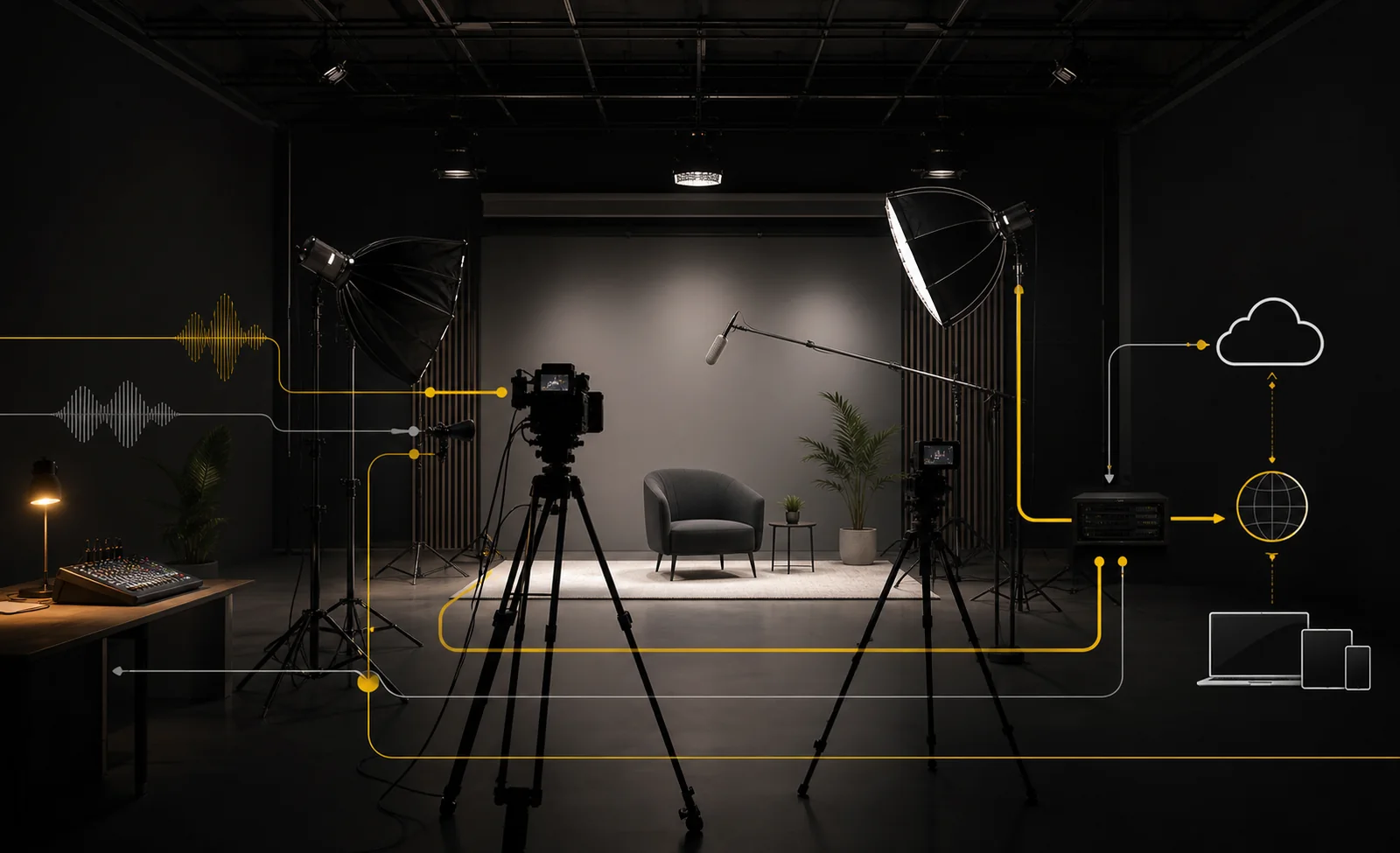
We work with new production systems and existing setups that need better quality, simpler operation, or a clear diagnosis.
Plan cameras, audio, switching, streaming, recording, control, monitoring, and network needs around the audience and operators.
Tell us what you need to produceImprove image quality, streaming audio, camera coverage, switching, or operator control without assuming a complete replacement.
Tell us what you want to improveTrace poor quality, interruptions, sync problems, and difficult operation from the room through the platform and network.
Tell us what is happeningRemote viewers need clear audio, useful camera angles, readable content, and a program that follows what matters.
The controls and production steps should match the people actually running the system—not an imaginary engineering staff.
Cameras, audio, switching, streaming, recording, monitoring, and network reliability should behave as one production system.
A system run by trained volunteers should not require a broadcast engineer for every event. A professional production team may need much deeper control. The design should fit the real staffing model.
Audio that sounds good in the room may not automatically sound good online. The stream needs a mix and monitoring approach that serves remote listeners.
Position, lens, movement, lighting, and sightlines determine what viewers can actually see.
Reliable upload capacity and stream monitoring support the production, but the operator should not have to manage the network complexity.
The room, microphones, mix, cameras, switching, encoding, platform settings, and network can all affect the result. We follow the complete path before recommending replacement.
Tell us what you’re working on or what isn’t working. Whether it’s a new installation, an upgrade, a takeover, or a system that needs troubleshooting, we’ll help you figure out the next step.
We will respond the same business day.