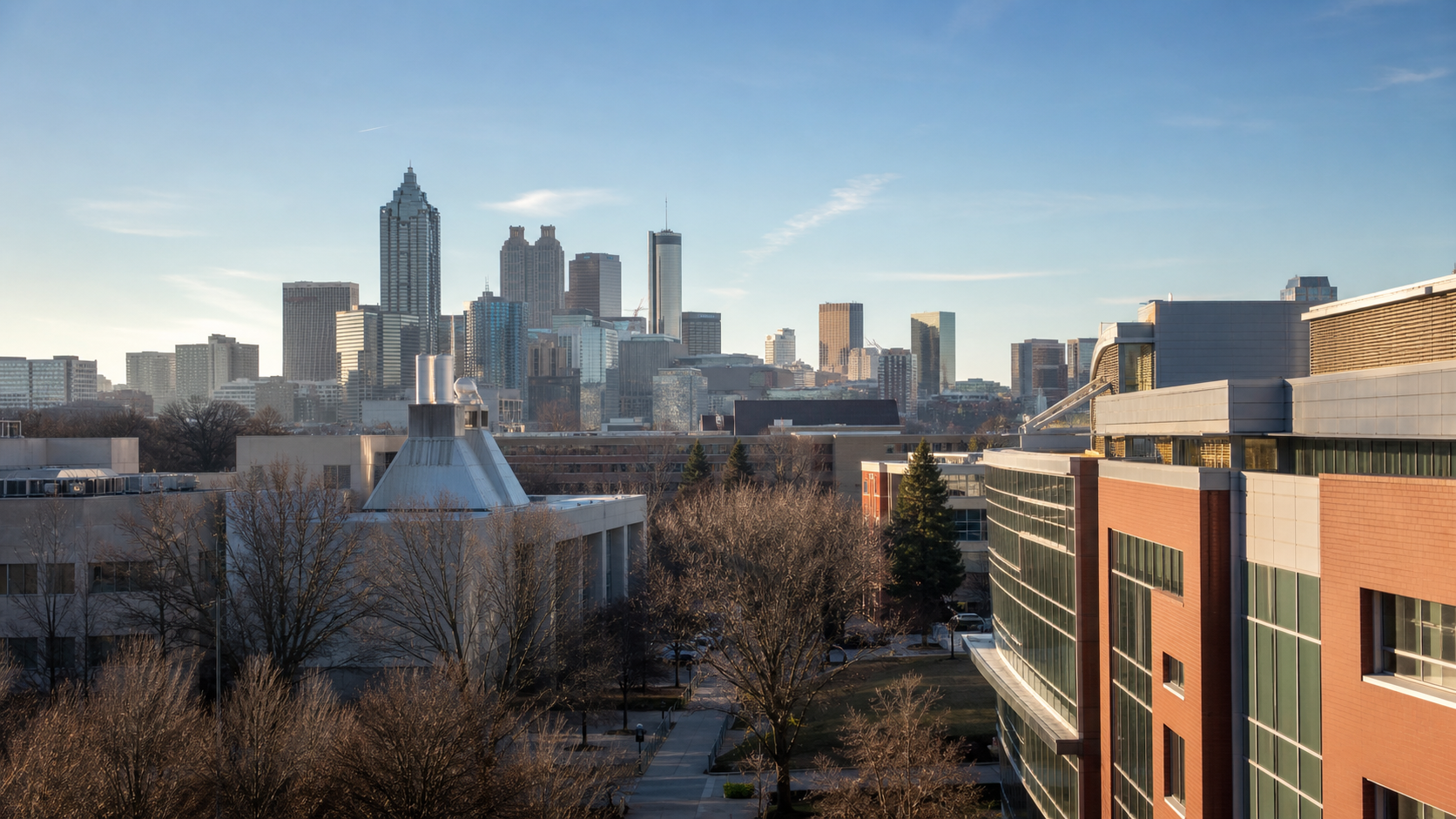
Illustrative winter skyline view of the Georgia Tech area and Midtown Atlanta near SREB headquarters

210 Solutions Project

SREB Headquarters Physical Security Modernization

The Southern Regional Education Board needed to replace an aging proprietary security environment at its Atlanta headquarters and move away from high recurring maintenance costs. During winter break, 210 Solutions modernized the building’s access control, intrusion detection, video surveillance, and fire-alarm infrastructure—bringing day-to-day security management into the Alarm.com for Business platform.

Southern Regional Education Board (SREB)

Atlanta, Georgia

The environment

Start with the environment and the operating reality.

The Southern Regional Education Board is a nonpartisan, nonprofit interstate compact that works with 16 states to improve education from early childhood through doctoral education and the workforce. Its headquarters is in Atlanta near Georgia Tech.

The physical-security project extended 210 Solutions’ work at the headquarters beyond the conference-room modernization completed previously. View the SREB conference-room AV project.

The challenge

SREB was operating an aging proprietary security system tied to another provider. The platform created high ongoing maintenance costs and left access control, intrusion detection, cameras, and life-safety infrastructure harder to manage and support than they needed to be.

The headquarters required a coordinated replacement that could improve everyday operation without disrupting the organization’s work. Existing cameras also needed to be retained where practical and migrated into the new platform.
The constraints

The building had to remain ready for normal business, so 210 Solutions scheduled the primary implementation during SREB’s winter break. The work involved approximately 24 existing cameras, seven controlled doors, and numerous intrusion and fire-alarm zones across an occupied headquarters.

Fire alarm is life-safety infrastructure, not simply another security-app feature. That portion of the work required repairing and upgrading the existing system to address code requirements while the access, intrusion, and video workflows were moved into the new operating environment.

The approach

Design the system around the people who use it.

210 Solutions replaced the legacy security architecture with Alarm.com for Business as the unified operational platform for access control, intrusion detection, and video surveillance. The design preserved useful existing camera infrastructure while simplifying how staff interact with doors, alarm states, events, and video.

The goal was not merely to install new devices. It was to create predictable building workflows: a valid credential opens the vehicle gate, and the first authorized badge presented at the front or rear entrance can disarm the intrusion system for the day.

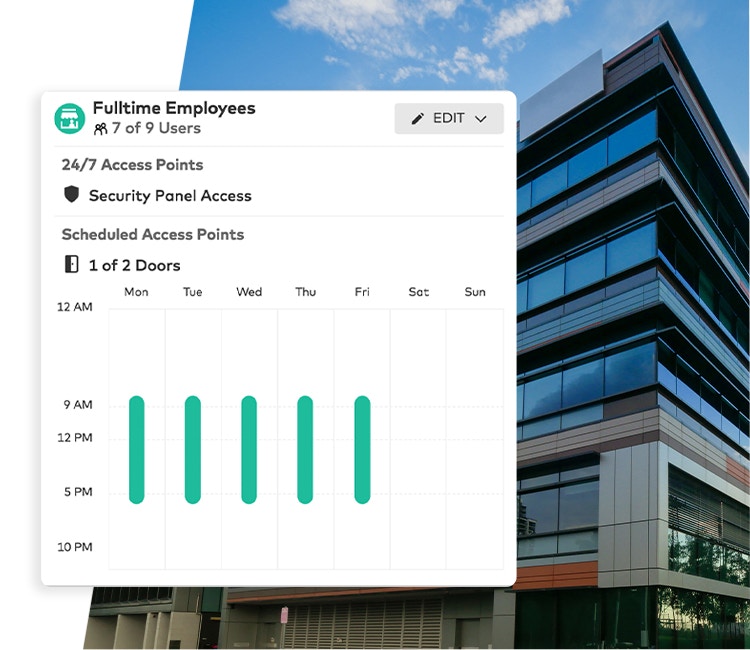
Alarm.com for Business commercial access schedule and user management interface
Alarm.com for Business commercial access-control interface. Manufacturer image shown for reference; not a screenshot of SREB’s account.

What 210 delivered

From plan to a working, supportable system.

Scope

The project included:

  • Alarm.com for Business cloud-managed security platform
  • Seven controlled doors, including the vehicle gate
  • Approximately 24 cameras migrated into the Alarm.com environment
  • Replacement and takeover of intrusion-detection devices and zones
  • Credential-based gate and building-entry workflows
  • Automatic intrusion-system disarming when the first authorized employee badges in at a designated entrance
  • Repair and upgrade of the fire-alarm system to address applicable code requirements
  • Testing, commissioning, and cutover during winter break

Execution

210 Solutions removed the dependency on the legacy proprietary environment and rebuilt the day-to-day security experience around one commercial platform. Access permissions, door activity, intrusion status, and video could be viewed and managed through the Alarm.com app and web interface.

The team brought approximately 24 cameras into the new environment, implemented access control across seven doors, and configured the gate and first-entry disarm automations around SREB’s operating workflow. The intrusion and fire-alarm zones were taken over, tested, and addressed as part of the building-wide cutover, with fire-alarm repairs and upgrades performed as a distinct life-safety scope.

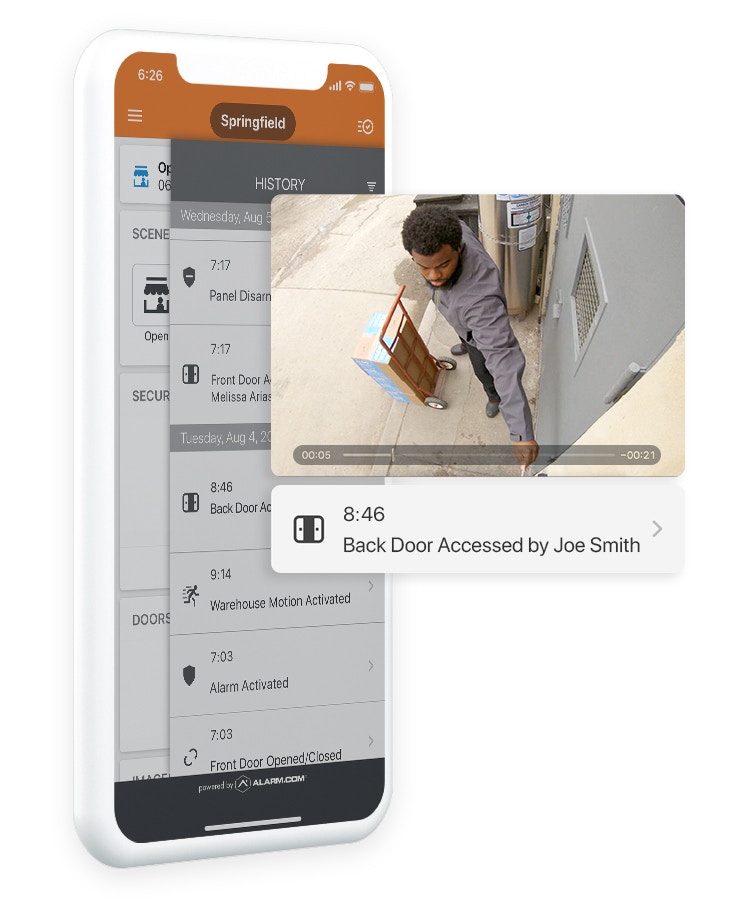
Alarm.com for Business commercial video history associated with a door-access event
Alarm.com for Business commercial video-history interface. Manufacturer image shown for reference; not a screenshot of SREB’s account.

The outcome

Technology that supports the operation.

SREB moved from an aging vendor-dependent system with high maintenance costs to a supportable commercial security environment that is easier to operate. Staff can manage access, intrusion, and video through one Alarm.com experience instead of working across disconnected tools.

The coordinated winter-break installation minimized disruption to SREB’s business. The resulting workflows also reduce repetitive steps: authorized credentials operate the gate and doors, while the first approved entry at a designated building entrance can disarm the intrusion system automatically.

Together with the earlier conference-room modernization, the project demonstrates a broader approach to the headquarters: simplify the user experience, retain useful infrastructure where appropriate, and make the building’s technology easier to support.

Key takeaway

One winter-break cutover replaced a costly legacy security environment with a unified, supportable platform for SREB’s Atlanta headquarters.

Plan the next project

Tell us what your building needs to do better.

Start with the people, the room, and the problem. We will help define a practical next step.