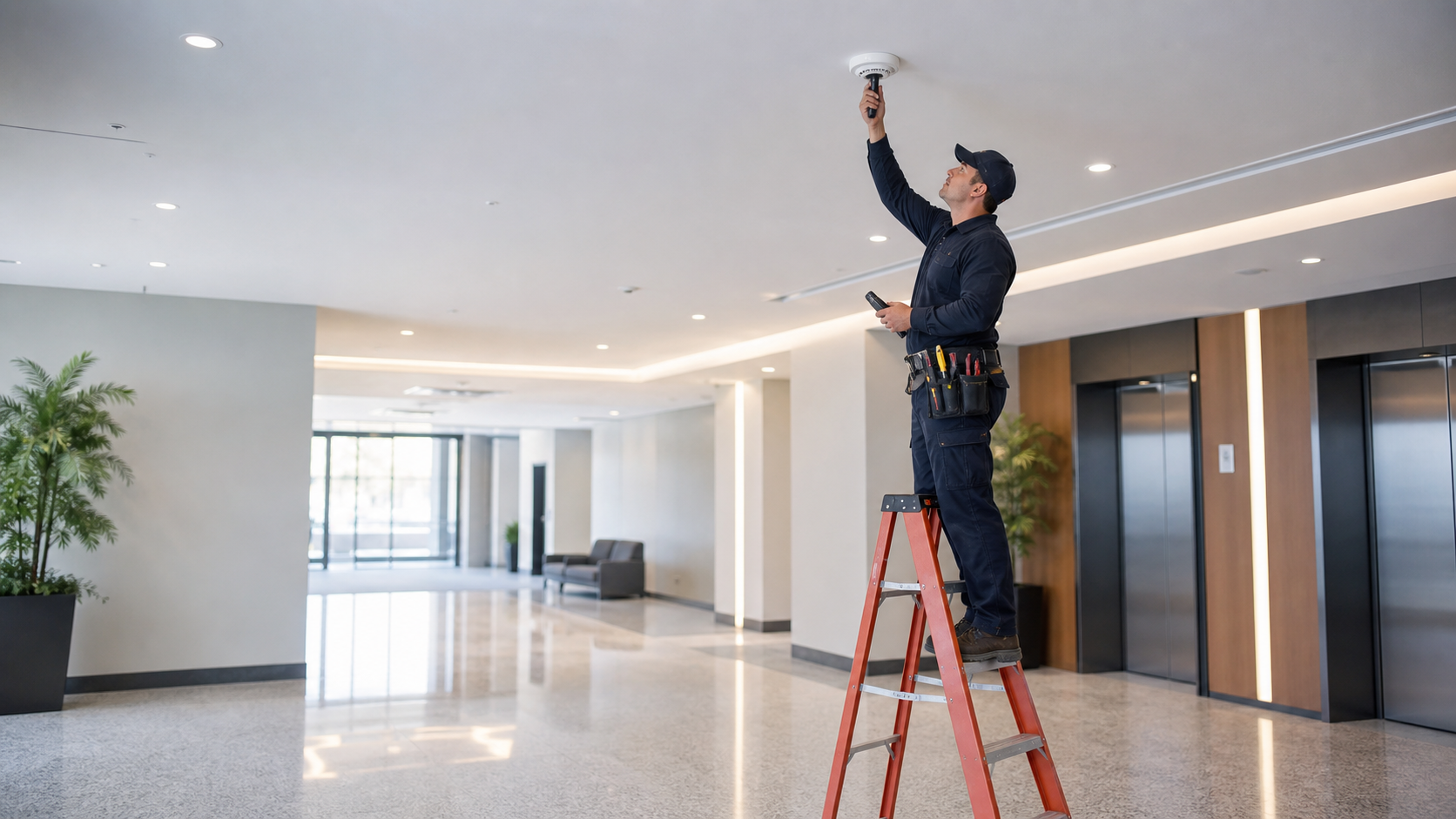
Confirm operation
Check that applicable devices, signals, power supplies, and connected functions respond as intended.

Commercial Fire Alarm Inspections
Commercial fire alarm systems require recurring inspection and testing. Even if the original installer is gone, 210 Solutions can inspect your existing system, document applicable devices and zones, identify deficiencies, and give your facility a clear record of the results.
Tell us where the building is located, what type of system you have if known, and when the last inspection was completed.
Existing and inherited systems
The original installer may have disappeared, stopped responding, or gone out of business. Building ownership may have changed, historical records may be missing, or nobody may know when the last complete inspection occurred.
We do not have to have installed the system to inspect it.
210 Solutions can take a practical first look at the system you already have and help establish a dependable inspection process going forward.
A repeatable responsibility
A documented annual inspection and testing cycle is a useful planning baseline for commercial building owners. The work is not paperwork alone—it tests applicable equipment and creates a defensible picture of the system’s condition.
Check that applicable devices, signals, power supplies, and connected functions respond as intended.
Identify failed, inaccessible, damaged, mislabeled, or poorly documented devices and system conditions.
Give facility management information that can be retained and shared with the appropriate stakeholder when requested.
Establish a consistent process that makes future inspections and year-over-year comparison easier.
Inspection and testing requirements vary by system, occupancy, equipment, manufacturer instructions, and local authority. 210 Solutions will help identify the requirements applicable to the facility.
Manufacturer-independent inspection
210 Solutions can inspect commercial fire alarm systems across major panel manufacturers, including systems installed by another company.
NOTIFIER, Fire-Lite, Silent Knight, Gamewell-FCI
Simplex and Autocall
Edwards / EST, Vigilant, Kidde Commercial
Siemens, Potter, Mircom, Bosch
Detection and notification devices may include products from System Sensor, Hochiki, and Apollo. Inspection capability does not automatically include unrestricted programming, proprietary software access, or factory-authorized repair capability for every platform. We will explain any limitation clearly.
As applicable to the installed system
The exact scope depends on the facility and installed system. Work may include inspection or functional testing of the following equipment and connected functions.
This page concerns fire alarm inspection and testing. It does not represent a sprinkler inspection under NFPA 25 or a complete engineering review of the system’s original design.
Calm and methodical
Collect available building, panel, monitoring, previous-inspection, and known-condition information.
Coordinate access, system notifications, monitoring arrangements, occupants, and operational limitations.
Work systematically through applicable equipment, devices, signals, power supplies, and connected functions.
Document what passed, failed, could not be accessed, or needs additional attention.
Distinguish operating components from deficiencies, access issues, observations, and recommended next steps.
Provide an organized record the facility can retain, reference, and use to plan corrective work and future inspections.
A usable system record
You receive a usable record of the system—not a vague invoice that simply says it was tested. The record is organized so a facility manager can understand the overall condition while technical details remain available for reference.
The exact delivery format and included supporting material depend on the facility and agreed inspection scope.

A clear next step
An inspection may identify failed, missing, damaged, inaccessible, mislabeled, or poorly documented devices; battery or power concerns; communication failures; trouble or supervisory conditions; building changes; or connected functions that do not respond as expected.
The inspection documents the condition. Repair work is separately authorized, and not every finding requires full system replacement. Where we have the required capability and system access, 210 Solutions can help prioritize and correct deficiencies.
Explore fire alarm repair and corrective service.Proprietary programming limitations or restricted software access will be explained honestly. An inspection does not guarantee fire-marshal approval or replace requirements established by the authority having jurisdiction.
Need help with an inherited system? Explore existing-system support.Continuity over time
Using the same accountable provider over time creates consistent records, a known device inventory, clearer repair history, and easier year-over-year comparison.
When personnel, ownership, or property management changes, the facility has a documented history and one company to call for the next inspection or corrective-service discussion.
Credibility through the work
210 Solutions approaches inspection work with the same priorities facility teams need: methodical testing, understandable communication, clear documentation, and honest explanations when proprietary system access limits the next step.
Licensing, technician qualifications, and any manufacturer-specific credentials should be confirmed against current records before being presented as formal proof.
Useful answers
Facility owners should generally plan around a documented annual inspection and testing cycle. Specific frequencies vary by device, system, occupancy, manufacturer instructions, and the authority having jurisdiction.
Yes. We do not have to have installed the system to inspect it. We first identify the installed equipment, available records, access constraints, and applicable scope.
That is common. Share any photographs or records you have, and we can begin by identifying the equipment during discovery or the site visit.
Inspection may be possible even when programming or repair access is proprietary. We will explain platform-specific limitations before extending the work into programming or corrective service.
The scope may include applicable control equipment, initiating devices, notification appliances, signals, power supplies, communication paths, and connected emergency-control functions.
Audible or visible notification may need to operate during functional testing. The visit is coordinated around monitoring, occupants, and facility operations before testing begins.
We help coordinate notices, access, monitoring arrangements, and operational constraints. Your facility team remains responsible for internal communication and site-specific procedures.
Duration depends on building size, device count, system complexity, access, documentation, and connected functions. We scope the visit from the available facility information.
Inaccessible devices are recorded as such rather than silently treated as passing. We explain what access or follow-up is needed.
You receive an organized inspection record covering the agreed scope, results, deficiencies, observations, and next steps. The exact format and supporting materials depend on the facility and scope.
The inspection documents each finding and its location where available. Corrective work is then scoped and separately authorized.
Where we have the required capability, parts, and system access, we can help prioritize and correct deficiencies. We explain proprietary or manufacturer-specific limitations honestly.
No. An inspection does not guarantee approval by an authority having jurisdiction, and this webpage is not legal or code-compliance advice.
Yes, subject to confirming the facility, system, scope, and access requirements. A consistent provider can make records and year-over-year comparison easier.
Request an inspection conversation
Whether the original installer is gone or you simply need a more dependable inspection provider, tell us about the building and the existing system.