
210 At Home · Lighting Design & Control
Lighting should shape the room without complicating it.
Layered lighting, simple control, and thoughtful scenes designed around the room, the architecture, and how the home changes throughout the day.
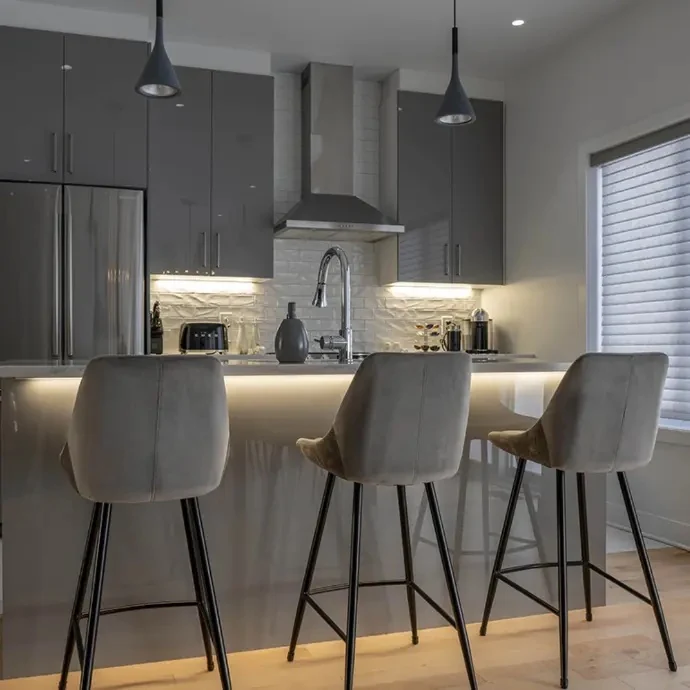
The experience
Good lighting is more than brighter or dimmer.
Ambient, task, accent, and decorative lighting play different roles. Warm-dim sources shift warmer as they dim, while tunable-white systems can adjust color temperature and intensity within supported parameters. Fixture, driver, dimming method, and control compatibility must be verified together.
210’s approach
Define the room, the outcome, the constraints, and long-term support before choosing the technology.
What the design considers
The details work together.
Lighting Layers
Coordinate ambient, task, accent, and decorative light so each layer has a clear purpose.
Warm Dim & Tunable White
Use color-tuning approaches only where the selected fixtures, drivers, controls, and design goals support them.
Keypads & Scenes
Replace banks of switches with clear, intentionally labeled control where it improves everyday use.
Centralized or Local Control
Choose the architecture around the home, electrical design, renovation limits, future service, and project scale.
New or existing homes
Plan early—or improve what is already there.
New construction gives the team more freedom to coordinate fixtures, loads, panels, keypads, wiring, and ceiling details. Existing homes can still benefit from better dimming, clearer controls, thoughtful scenes, and targeted room upgrades without replacing everything.
Before recommendations
Current product requirements, compatibility, licensing, infrastructure, and support conditions are verified for the specific project.
Related residential solutions
The room rarely works alone.
Motorized Shades & Drapery
See how this capability connects to the larger residential experience.
Explore this solutionControl4
See how this capability connects to the larger residential experience.
Explore this solutionIndependent Living
See how this capability connects to the larger residential experience.
Explore this solutionStart with the situation
Tell us how the rooms are used, what the lighting currently gets wrong, and how you want the home to feel.
You do not need a product list. We will help determine the right questions, coordination, and next step.